Role: Product Manager | Personalization | Recommendation Systems | AI | B2C
Background > Problem > Use Cases > Personas > Phase 1 > Business Value > Phase 1
Background
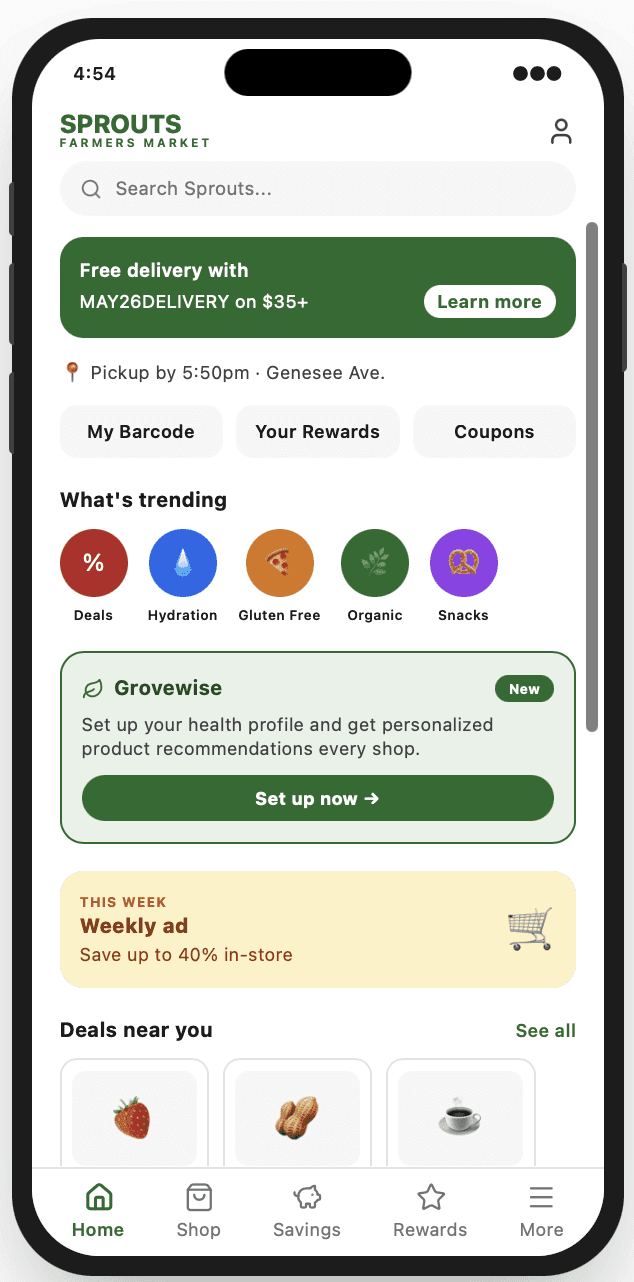
Sprouts Farmers Market is a specialty grocer with 400 stores and a catalog built around natural, organic, and diet-specific products. However, their app treats every shopper the same. A customer managing diabetes sees the same homepage and recommendations as someone with no dietary restrictions. The data and brand credibility are already there but what's missing is the technical foundation to make personalization work.
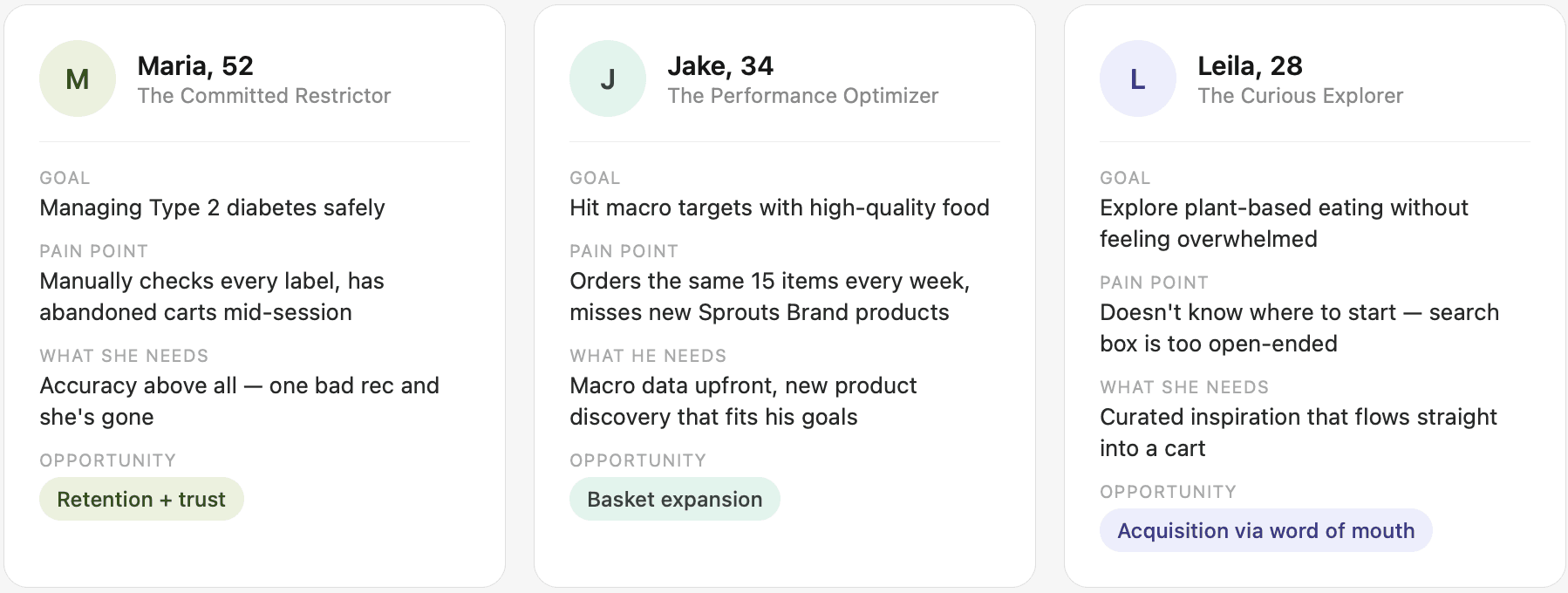
The problem is real and felt most acutely by Sprouts' highest-LTV shoppers.
Trust is the primary currency. One wrong recommendation erodes confidence permanently.
Shoppers want simplicity. Stop checking labels and start trusting the app.
These insights drove the Phase 1 decision to build the data foundation before shipping any customer-facing AI features.
The problem is real and felt most acutely by Sprouts' highest-LTV shoppers.
Trust is the primary currency — one wrong recommendation erodes confidence permanently.
Shoppers want simplicity — stop checking labels and start trusting the app.
These insights drove the Phase 1 decision to build the data foundation before shipping any customer-facing AI featu
Link Here: https://grovewise-green-showcase.lovable.app
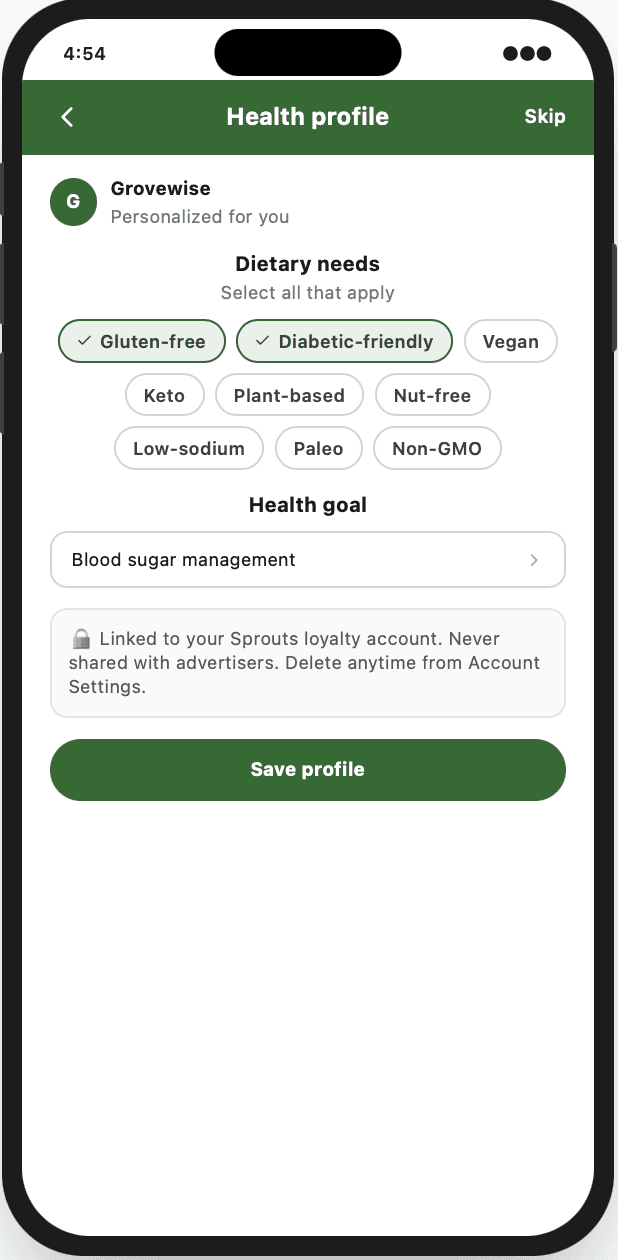
AI recommendations need three things to work: clean product data, dietary filtering rules, and a saved shopper health profile. None of these exist today. Phase 1 builds all three so that when the AI runs in Phase 2, it runs safely and accurately.
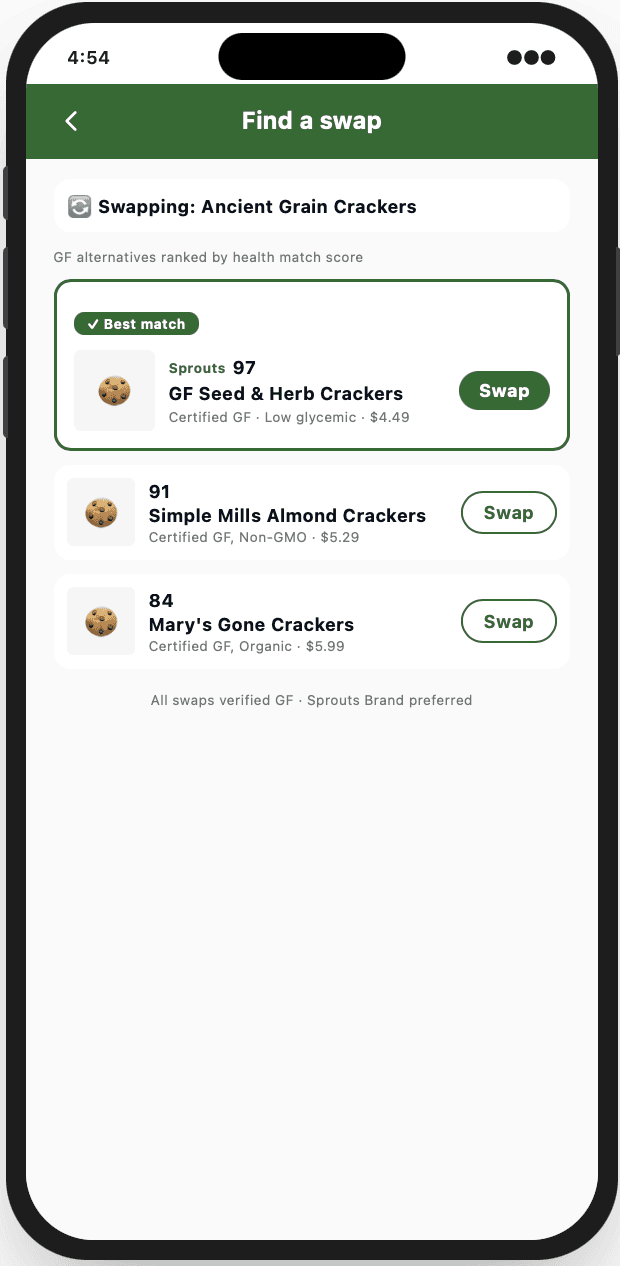
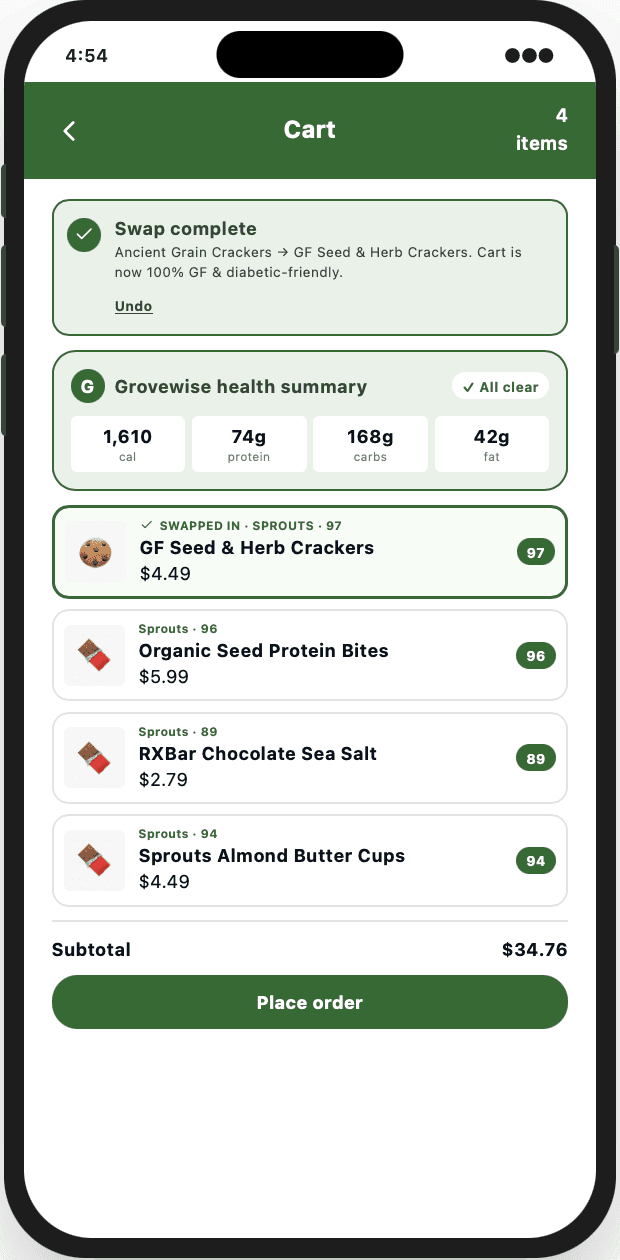
** Prototype at the end will be end-to-end flow of what the outcome of phase 3 will look like.
Business Value:
Value Driver
How Phase 1 Enables It
New item discovery
Health profile data enables Phase 2 to surface new or unfamiliar items that match a shopper’s goals and expand basket size beyond the default 10–15 repeat items.
Browse-to-cart conversion lift
Accurate dietary filtering removes the need for manual label-checking that causes health shoppers to abandon browse sessions. Phase 1 makes filtering possible
Sprouts Brand private label attach rate
AI recommendations in Phase 2 can surface Sprouts Brand items within health-compliant results. Phase 1’s product data processing tags Sprouts Brand items for this logic.
Phase 1: Components to Build
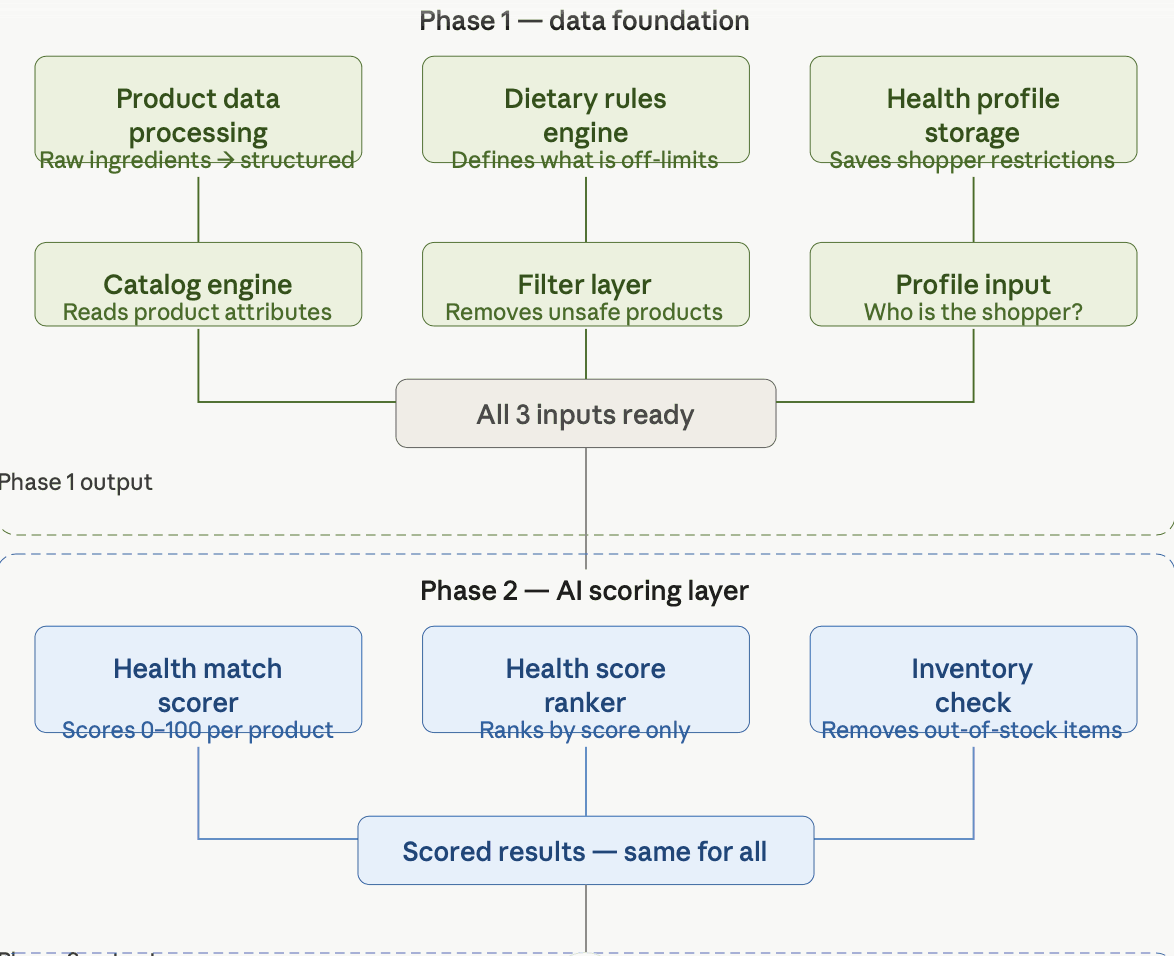
Product Data Processing Pipeline
As a shopper, I want product ingredients automatically processed and structured so that the app can accurately identify which products match my dietary needs without me checking every label.
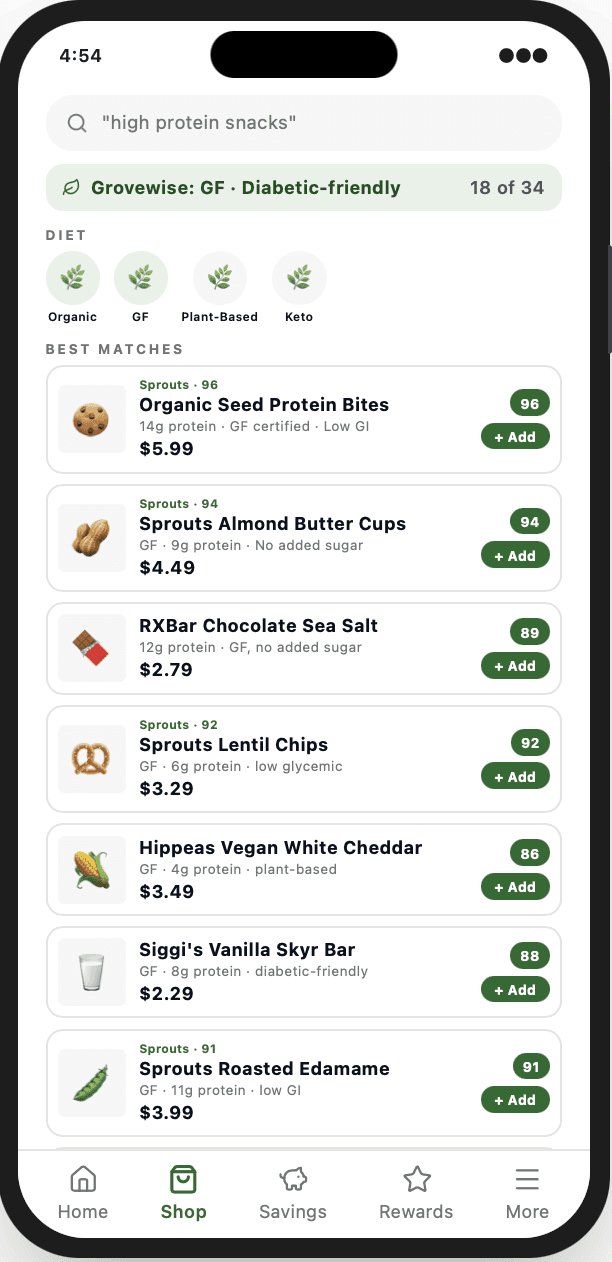
Each product record includes parsed ingredients, dietary flags, nutritional data (calories, protein, carbs, fat, sugar, fiber), certifications, and a Sprouts Brand indicator.
Dietary Filtering Logic — Rules Engine
As a shopper, I want a dietary filtering layer applied before any recommendations surface so that I never see products that conflict with my health profile.
User Health Profile Storage
As a shopper, I want my dietary restrictions saved in the app so that every recommendation is personalized to what is safe for me to eat.
Once the foundation is in place and Grovewise launches across Phase 2 and Phase 3, success is measured by three metrics:
Purchase conversion for dietary-restricted shoppers improves by 25–35% based on industry benchmarks for health-personalized grocery experiences.
45% of monthly active users complete a health profile within 90 days of launch.
**Published onboarding activation benchmarks from Appcues and Mix panel
Shoppers discover 4 new items per order on average, up from 1.3 today.
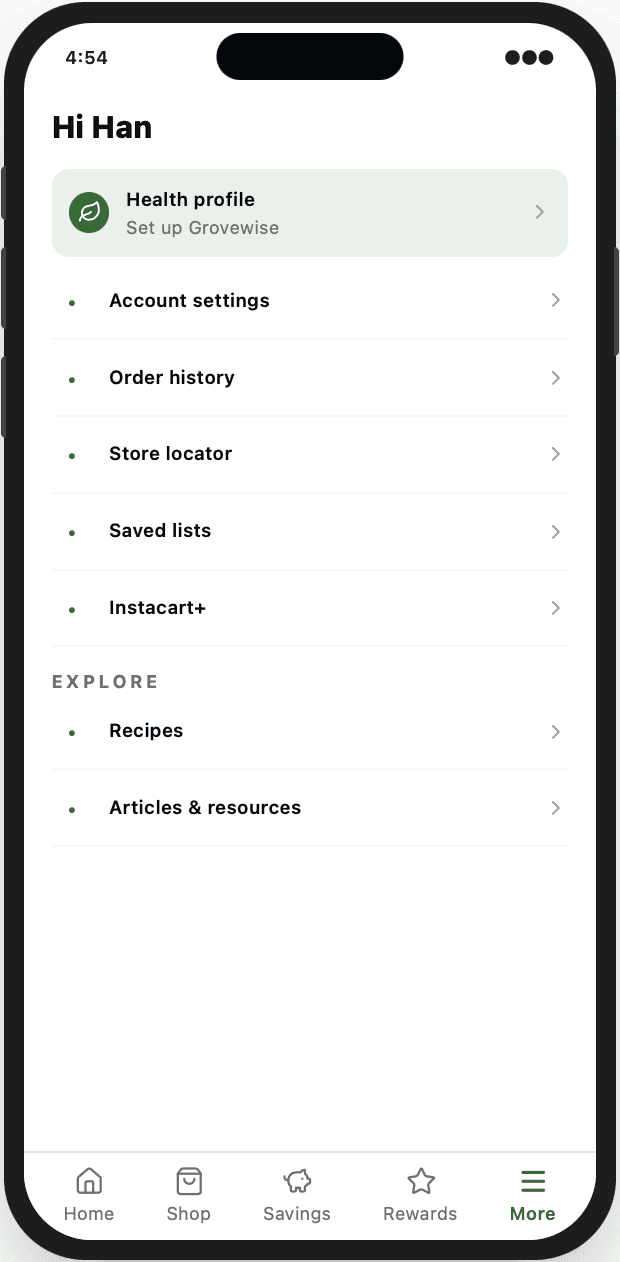
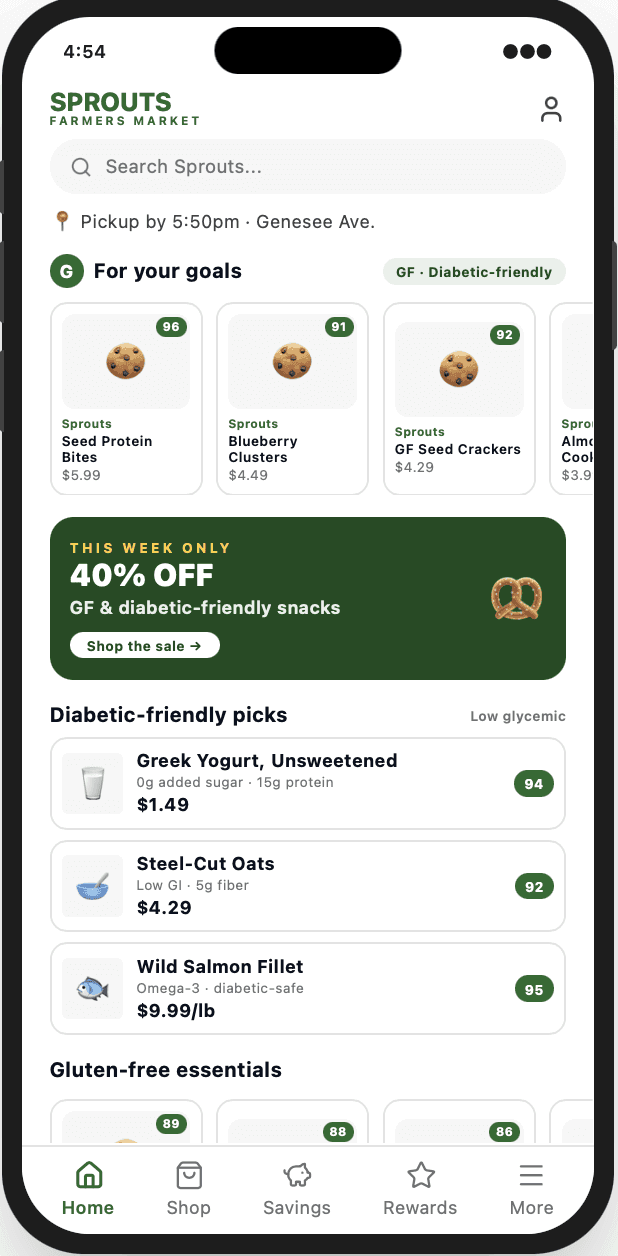
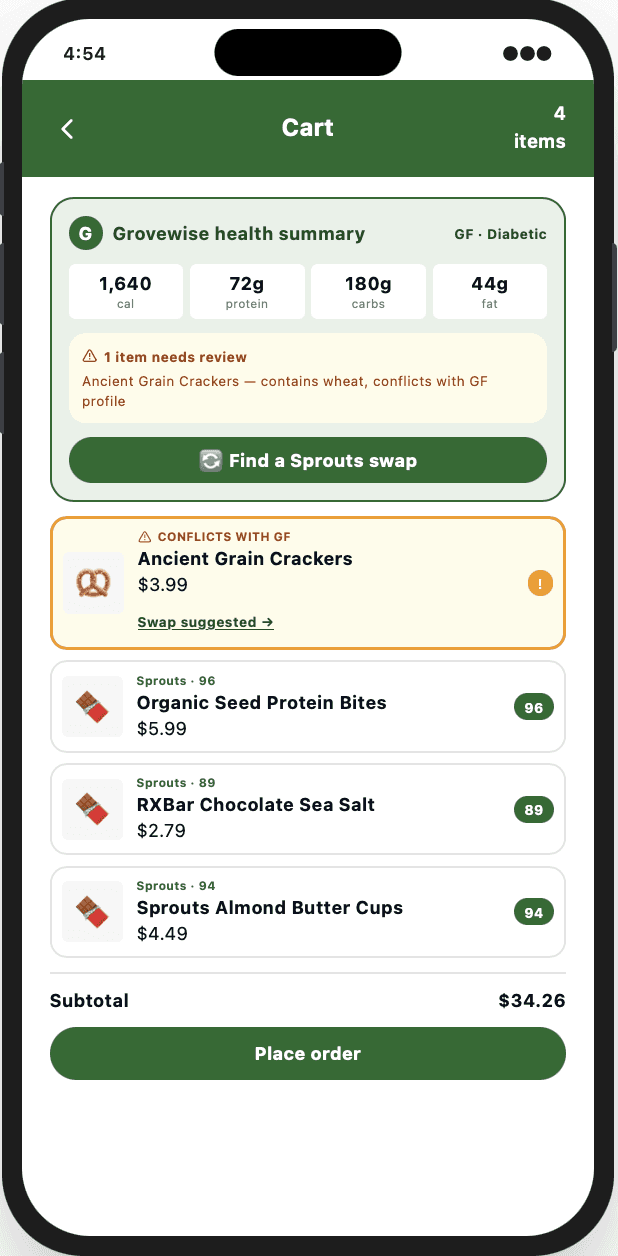
Final Design and Thoughts
If I had more time on this capstone I would focus on:
Validating the health match scoring weights with real Sprouts loyalty purchase data to confirm that shoppers with specific health goals actually buy the products the model scores highest and refine the weights based on real behavior rather than expert estimates alone.
Fully speccing the Phase 3 personalization ranker, including how it handles new users with no purchase history and how it adapts when a shopper changes their health goal mid-journey.
Adding a detailed A/B test design for Phase 2 launch: sample size, traffic split, test duration, and decision criteria and to go beyond defining metrics and show how the experiments would actually be run.